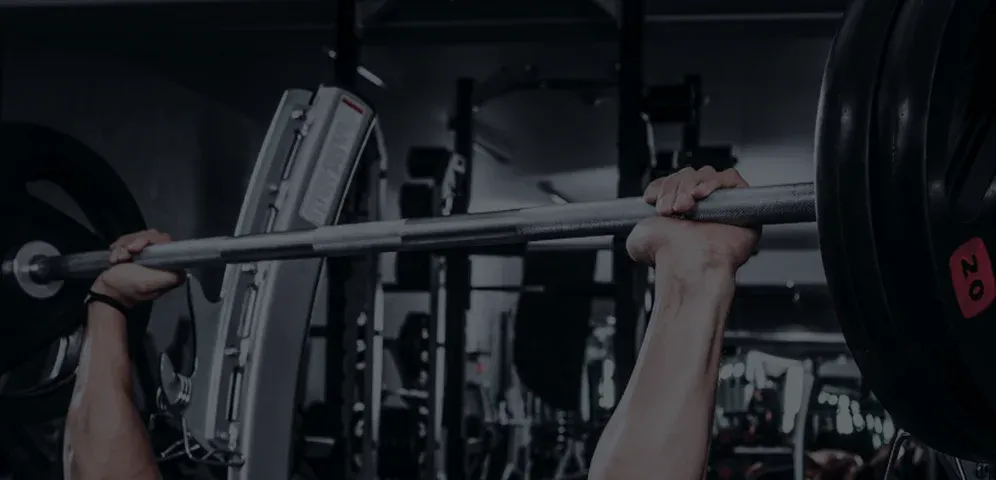
The Ideal Chest Day: The Best Chest Exercises
Everyone does the bench press, but few do it right. We'll show you how to pump up your chest muscles so they fill out a tight T-shirt.
The chest is made up of the pectoralis major, the pectoralis minor, the serratus anterior and the intercostal muscles. When you train, though, you mainly work the pectoralis major, which makes up the largest part of the chest. It is divided into three parts: upper, middle and lower. To develop them evenly, you should work each of them. It's not just about how they look, but also how strong they are. Without them, you couldn't lift your arms or hold your shoulders in place.
Starting a workout without stretching and warming up is like getting behind the wheel without a seatbelt. You can do it, but it's dangerous. So don't skip it. Shoulder rotations with a wooden stick or a resistance band prevent muscle tension from building up and improve your range of motion.
The most important chest exercise that belongs in your fitness repertoire is the bench press. You can do it on an adjustable bench with a barbell or on a flat bench with dumbbells. You may see men doing this exercise more often, but it's great for women too. Ladies, go for it, and guys, don't be afraid of hip thrusts. Read about how to do them properly without hurting yourself.
How to bench press properly
If your gym has an adjustable bench, this exercise lets you target all three parts of the pectoral muscle. Proper technique is essential, though. It's the only way you'll see results and avoid injury during training.
- Stabilise yourself with your whole back flat on the bench. There is also a variation with an arched “bridge” back, but that's mostly used by bodybuilders and professionals. If you're a beginner, it's better to keep your back stabilised while you lift.
- Squeeze your shoulders and shoulder blades together and press them into the bench. That way you won't hunch and push the weight with your shoulders.
- Push your ribcage out and expand it to its maximum.
- Your grip should be wider than shoulder width. The closer your hands are, the more you work your triceps. A wider grip ensures you hit the pectoral muscle.
- When you lower the weight to the middle of your chest, your elbows should form a 90-degree angle.
- Don't forget to breathe in before performing the rep. Don't breathe while lifting the weight, as it can throw off your perfect form.
Exercises for the upper chest
- Bench press on an incline bench set at roughly an 80-degree angle upwards. You can use dumbbells or a barbell and follow the instructions above.
- Cable front raise. Stand in the middle of the cable machine. Take an underhand grip on the handles of the low pulleys and keep your body firm with your elbows slightly bent. Raise your arms forward by contracting your chest muscles.
Exercises for the middle chest
- Bench press on a flat bench. Focus on the correct position of your shoulders, shoulder blades and chest.
- Dumbbell flyes. Lie on the bench, extend your arms in front of you, turn your palms towards each other and keep your elbows slightly bent. Slowly lower the weight until you feel a slight stretch in your chest muscles.
Exercises for the lower chest
- Bench press on a decline bench set at a 40-degree angle. Take an overhand grip on the bar and perform it as you would a standard bench press.
- Cable flyes. Stand in the middle of the cable machine and take an overhand grip on the handles of the high pulleys. Put one foot slightly forward and keep both knees slightly bent. With your torso leaning slightly forward, pull the handles down and together in front of you.
Don't stagnate, mix it up
Changing the weight, increasing the number of reps, shortening rest periods and combining exercises forces your body to work and pushes it forward. If you still feel like you're standing still, try switching up your training.
One effective way to do that is to alternate strength and volume training. One week, train with heavier weights, fewer reps and longer rest periods. The next week, focus on lighter weights but do more reps with shorter rest periods.
Everything takes time, and a well-built chest is no exception. Muscles don't grow overnight. Don't forget to eat quality foods rich in protein, vitamins and minerals. Give your body enough rest and amino acids, so it can recover.
On days when your chest is resting, you can train your abs. Read how to do it on our blog.