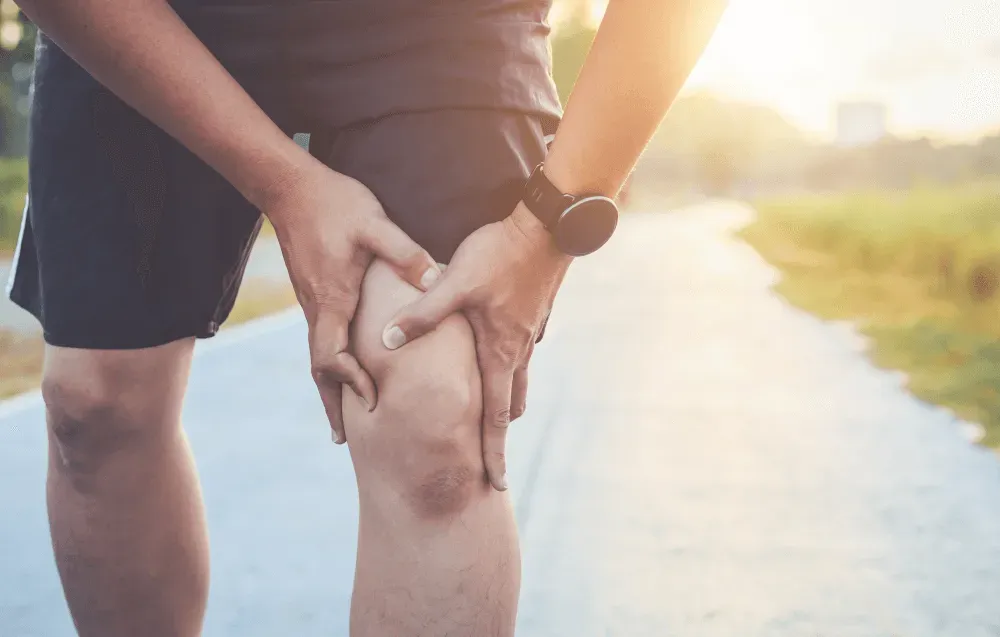
First Aid for a Knee Injury and How to Avoid One
Joint injuries are nothing unusual, but you're far more likely to get one outside the gym. Why is that, and what is the first aid for a knee injury?
Technique and warm-up
You can injure your knee during an exercise, but also outdoors, away from the gym. In training, the most likely culprit is poor technique and once you add heavier weight to that, the chance of a knee injury rises sharply.
A weak warm-up, or none at all, is also a sure route to unnecessary pain. During your warm-up, don't forget to focus specifically on the movements you'll be doing in your exercises a few minutes later. This is especially important in winter and above all during morning workouts, when we're much stiffer. Also remember that proper joint nutrition can help you prevent a range of injuries.
Overload
If you overdo your training volume and don't recover enough over the weeks, sooner or later something will give. And it may well be a knee. You can also hurt yourself with excessive weights, and here the difference between good and bad technique matters. If you load too much but your technique is good, you'll basically just fail the lift. It's true that supplements can help, but when heavy weight meets poor technique, the risk of injury shoots up.
Outside the gym
Injuries outside the gym are a common case, though. When training (with proper technique), our movements are controlled and in a squat, for example, our knees are in a relatively good position. Injuries are more likely to happen during an unexpected or unusual movement. For example, when we walk through the forest on rough terrain and constantly correct our step, the joints take a beating, get overloaded and can start to hurt, especially in untrained people.
If you push on through the pain anyway and don't rest, inflammation can develop, which will sideline you for far longer than the injury itself would have.
When you start to feel pain
Don't panic. If it's just overload, take the movement and load off it, rest and you can carry on. Every exercise can be adjusted so that you don't load the affected area, or, on the contrary, so that you strengthen it with corrective exercises.
If you really do get injured, find the cause and start dealing with it. Your coach can give you immediate help. After that, I recommend seeing a physiotherapist, who will help you with the right exercises. Proper sports nutrition is also key and shouldn't be forgotten. If the problem is persistent or acute, see a doctor.
How not to hurt yourself
In squat-type exercises, make sure your knees don't cave inwards, but push them outwards and keep them in line with your feet. In general, whenever you're not sure you're doing an exercise with correct technique, ask a coach or someone more experienced.
Read also: First aid for a pulled muscle and how to prevent one